Artificial intelligence is transforming how NPCs interact with players, creating more dynamic and realistic game worlds. Machine learning algorithms are now capable of generating vast landscapes and unique character interactions on the fly. Game developers are using AI to create more immersive and responsive gaming experiences than ever before.

The integration of artificial intelligence into game development has ushered in a new era of possibilities for creating more immersive and dynamic gaming experiences. From procedurally generated worlds to increasingly sophisticated non-player characters (NPCs), AI and machine learning are fundamentally changing how games are made and played.
One of the most significant applications of AI in gaming has been in the evolution of NPC behavior. Traditional NPCs operated on pre-written scripts and decision trees, leading to predictable and often repetitive interactions. Modern AI-driven NPCs, however, can learn from player interactions and adapt their behavior in real-time, creating more natural and engaging encounters.
Machine learning algorithms are now being used to analyze player behavior patterns and adjust NPC responses accordingly. This means that NPCs can develop unique personalities and relationships with players based on their interactions, leading to more meaningful and memorable gaming experiences. Some games are even experimenting with NPCs that can engage in natural language conversations, using advanced language models to generate contextually appropriate responses.
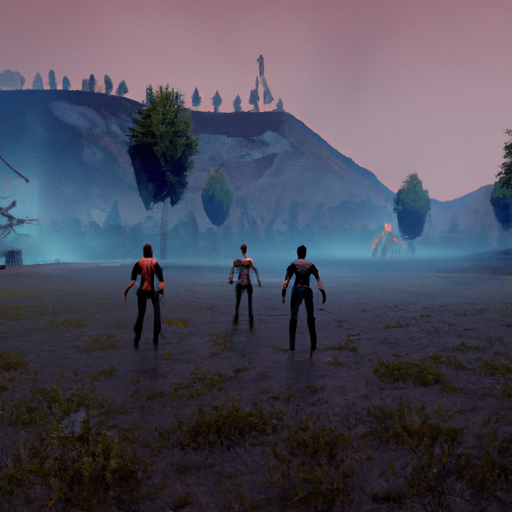
World generation is another area where AI is making remarkable strides. Procedural generation has been used in games for years, but machine learning has taken this concept to new heights. AI algorithms can now create vast, detailed landscapes that feel hand-crafted while being generated dynamically. This technology not only saves development time but also creates the potential for infinite exploration in games.
The application of AI in terrain generation goes beyond simple randomization. Modern algorithms can understand the principles of realistic geography, ensuring that generated landscapes follow natural patterns and rules. Rivers flow logically, mountains form in realistic ranges, and ecosystems distribute themselves in ways that make sense within the game world.
AI is also revolutionizing character animation and movement. Machine learning models trained on motion capture data can generate realistic character movements on the fly, adapting to different situations and environments. This technology allows for more fluid and natural character movement without the need for extensive animation libraries.
Game balancing and difficulty adjustment have also been transformed by AI. Machine learning algorithms can analyze player performance in real-time and adjust game parameters to maintain an optimal level of challenge. This dynamic difficulty adjustment ensures that players remain engaged without becoming frustrated, creating a more personalized gaming experience.
The use of AI in game testing has significantly improved the quality assurance process. AI-powered testing tools can play through games countless times, identifying bugs and balance issues that human testers might miss. These tools can also simulate different play styles and skill levels, providing developers with comprehensive feedback on game mechanics.
Environmental storytelling has become more sophisticated through the use of AI. Games can now generate unique stories and events based on player actions and choices, creating narratives that feel organic and personal. This technology allows for truly dynamic storytelling where player decisions have far-reaching consequences throughout the game world.
AI is also being used to enhance game audio. Machine learning algorithms can generate adaptive music and sound effects that respond to player actions and game events in real-time. This creates more immersive soundscapes that enhance the emotional impact of gaming experiences.
However, the integration of AI into game development also presents challenges. Ensuring that AI-driven systems remain balanced and fair while maintaining the designer's creative vision requires careful consideration. There's also the challenge of managing computational resources, as sophisticated AI systems can be demanding on hardware.
Looking to the future, the potential applications of AI in gaming seem limitless. Researchers are exploring the possibility of truly intelligent NPCs that can learn and evolve over time, creating persistent virtual characters that remember players across multiple gaming sessions. The development of more sophisticated natural language processing could lead to games where players can have genuine conversations with virtual characters.
The impact of AI on game development extends beyond individual features to influence the entire development process. AI tools are being used to streamline asset creation, optimize performance, and even assist in game design decisions. This has the potential to make game development more accessible to smaller studios while allowing larger developers to create more ambitious projects.
As AI technology continues to advance, we can expect to see even more innovative applications in gaming. The combination of AI with other emerging technologies like virtual reality and cloud computing could lead to gaming experiences that are more immersive and responsive than anything currently possible. The future of gaming is being shaped by AI, and the possibilities are only beginning to be explored.